
In crisis? Call or text 988 any time, or dial 911 in an emergency.
Our services

Cognitive Behavioral Therapy (CBT)

CBT is one of the most researched forms of therapy available. It is not about "thinking positive". It is about understanding the patterns behind how you feel, and learning practical skills to change them.
What CBT actually is

Structured. Practical. Backed by decades of research.

Cognitive Behavioral Therapy is a goal-focused, time-limited therapy built on a simple idea: the way we interpret situations shapes how we feel and what we do. When those interpretations become distorted or automatic, they can keep anxiety, low mood and unhelpful habits going.
In CBT, you and your therapist work as a team. Together you identify the thoughts and behaviors that keep you stuck, test them against real evidence and practice new responses, both in session and in everyday life. The aim is for you to leave therapy with skills you can keep using on your own.
The core model

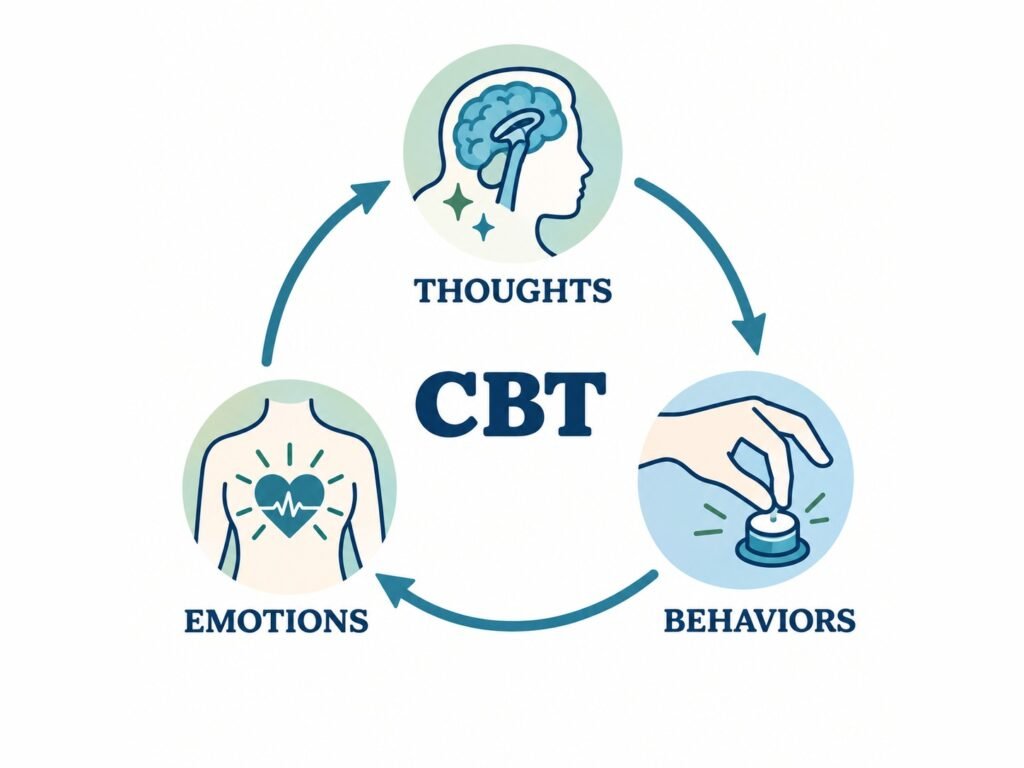
The CBT triangle: how thoughts, feelings and behavior connect

Each corner of the triangle influences the other two. Change one, and the others begin to shift.

Thoughts

The automatic interpretations we make about ourselves, others and the future, such as "I always mess things up".

Feelings

The emotions and body sensations that follow, like dread, sadness, tension or a racing heart.

Behaviors

What we do in response, such as avoiding, withdrawing or over-checking, which often reinforces the original thought.
“CBT does not ask you to ignore real problems. It helps you see them clearly, so you can respond in a way that actually helps.”
Inside CBT

What actually happens in a CBT session

01

Agenda setting

Each session starts with a quick check-in and a shared plan, so time is focused on what matters most to you.
02

Thought examination

You learn to catch automatic thoughts, notice thinking traps and weigh them against the evidence.
03

Skill building

We practice concrete tools such as problem-solving, behavioral activation, relaxation and exposure.
04

Practice between sessions

Short, realistic exercises help you use new skills in real life, where change really happens.
05

Progress tracking

We regularly review symptoms and goals so we can see what is working and adjust the plan.
06

Relapse prevention

Toward the end, we build a personal plan for handling setbacks and keeping your progress going.
What CBT treats

CBT is effective across a wide range of conditions

Mood

Anxiety

OCD and related

Trauma and stress

Behavioral

Other applications

Understanding the difference

CBT vs. general talk therapy

CBT

General supportive talk therapy

Why Holy Family

What makes our CBT care different

CBT built around you

At Holy Family Mental Healthcare Services, Dr Loveline Awa, DNP, PMHNP-BC, and our team tailor every step of CBT to your goals, pace and preferences.

Integrated psychiatry and therapy

Medication management and therapy are coordinated by one team, so your plan stays connected.

Care across the lifespan

We work with teens, adults and older adults, and involve families when it helps.

In person and telehealth

Visit our office in Sewell, NJ or meet by secure video from home.

Free consultation

Call (561) 285-1623 for a free consultation to talk through your needs and next steps.

Insurance-friendly

We accept most major insurance plans, including Medicare and Medicaid, and help you verify coverage.


Common questions

Common questions about CBT

How is CBT different from other types of therapy?
CBT is more structured and skills-focused than many approaches. Sessions follow an agenda, and you practice specific techniques to change thoughts and behaviors rather than mainly talking things through.
Many people notice meaningful change within 8 to 20 sessions, depending on the concern and its severity. We review progress together and adjust as needed.
No. CBT is about accurate thinking, not positive thinking. You learn to look at the evidence and find balanced, realistic ways of seeing a situation.
Between-session practice is part of CBT, but we keep it short, practical and matched to your schedule. Small, consistent steps work best.
Yes. CBT works well over secure video, and many of our clients choose telehealth for convenience.
We will talk openly about it. CBT can be combined with medication or another approach such as DBT or IPT, and we will adjust your plan until it fits.
Ready to get started?

Real tools. Real change. Starting now.

Wondering whether CBT is the right fit for you? Call (561) 285-1623 to schedule a free consultation.
We provide compassionate, individualized mental health care designed to help you better understand yourself, manage emotional challenges, develop effective coping skills, and work toward meaningful personal goals. Every person has a unique story, and care should be tailored to your experiences, needs, strengths and goals.