
In crisis? Call or text 988 any time, or dial 911 in an emergency.
Our services

Dialectical Behavioral Therapy (DBT)

DBT helps people who feel emotions intensely learn to ride the wave instead of being pulled under. It balances acceptance of who you are today with practical skills for changing what is not working.
What DBT actually is

Acceptance and change, working together.

Dialectical Behavioral Therapy is a skills-based form of cognitive behavioral therapy originally developed by Dr. Marsha Linehan to help people with intense, hard-to-manage emotions. "Dialectical" means holding two ideas at once: you are doing the best you can, and you can learn to do things differently.
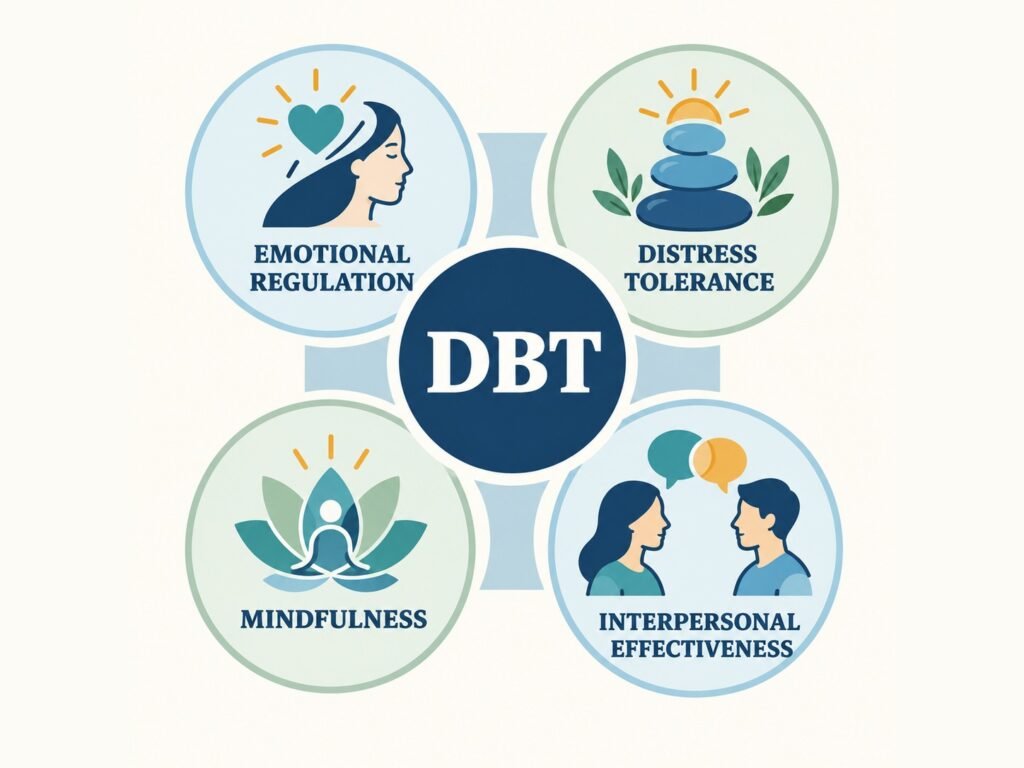
DBT teaches concrete skills in four areas: mindfulness, distress tolerance, emotion regulation and interpersonal effectiveness. In our practice, DBT skills are taught and coached in individual sessions and woven into your broader care plan.
The core model

The four DBT skill areas

Each module builds a different kind of strength. Together they create a toolkit for difficult moments.

Mindfulness

Notice thoughts, feelings and urges in the present moment without judging them or acting on them automatically.

Distress tolerance

Get through a crisis without making it worse, using skills like TIPP, self-soothing and radical acceptance.

Emotion regulation

Understand and name emotions, lower your vulnerability to them and change emotions you want to change.

Interpersonal effectiveness

Ask for what you need, say no and protect relationships and self-respect at the same time.
“DBT starts from a place of validation: your emotions make sense. From there, we build the skills to respond to them differently.”
Inside DBT

What actually happens in DBT-informed therapy

01

Shared goals

We clarify what a "life worth living" looks like for you and set goals around it.
02

Diary cards

A simple daily tracker of emotions, urges and skills used helps us see patterns between sessions.
03

Chain analysis

We walk step by step through difficult moments to find where a different response is possible.
04

Skills teaching

You learn specific skills from the four modules, with handouts and real-life examples.
05

Skills practice

We rehearse skills together, then you try them in daily life and report back on what helped.
06

Validation and change

Every session balances understanding where you are with steady movement toward your goals.
What DBT treats

DBT helps when emotions feel overwhelming

Personality

Emotional crises

Mood

Behavioral

Trauma and stress

Relationships

Understanding the difference

DBT vs. general talk therapy

DBT

General supportive talk therapy

Why Holy Family

What makes our DBT care different

DBT built around you

At Holy Family Mental Healthcare Services, Dr Loveline Awa, DNP, PMHNP-BC, and our team tailor every step of DBT to your goals, pace and preferences.

Integrated psychiatry and therapy

Medication management and therapy are coordinated by one team, so your plan stays connected.

Care across the lifespan

We work with teens, adults and older adults, and involve families when it helps.

In person and telehealth

Visit our office in Sewell, NJ or meet by secure video from home.

Free consultation

Call (561) 285-1623 for a free consultation to talk through your needs and next steps.

Insurance-friendly

We accept most major insurance plans, including Medicare and Medicaid, and help you verify coverage.


Common questions

Common questions about DBT

Is DBT only for borderline personality disorder?
No. DBT was first developed for borderline personality disorder, but its skills help many people with intense emotions, depression, substance use, eating concerns and relationship difficulties.
DBT grows out of CBT but adds acceptance and mindfulness, along with a strong focus on validation and specific skills for emotional crises.
We currently provide DBT-informed individual therapy and skills coaching. If a full DBT program with group sessions would serve you better, we will help you find one.
Skills work usually unfolds over several months. Many people notice they handle hard moments differently within the first few weeks.
We build a personal safety plan with you. In an emergency, call or text 988 any time or dial 911.
Yes. Skills teaching, diary card review and practice all work well over secure video.
Ready to get started?

Steadier emotions. Stronger relationships.

Wondering whether DBT is the right fit for you? Call (561) 285-1623 to schedule a free consultation.
We provide compassionate, individualized mental health care designed to help you better understand yourself, manage emotional challenges, develop effective coping skills, and work toward meaningful personal goals. Every person has a unique story, and care should be tailored to your experiences, needs, strengths and goals.